Thursday, September 12, 2013

Benefits of Royalty Trusts


Do you know the benefits of owning a royalty trust? http://bit.ly/1d742fx 

Tuesday, September 10, 2013

Human Overconfidence + A Post-Crisis World = Even More Indebtedness


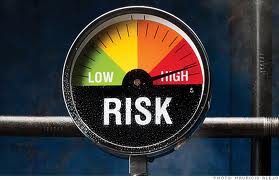
The impostor investor – particularly the impostor professional investor – is behaving as though the Federal Reserve has eradicated the possibility of market “tail” risks due to the commitment of the Fed to massively intervene and manipulate market forces.


Attachment

Tuesday, September 3, 2013

Thursday, August 29, 2013

Weighing In: It’s just the way Wall Street Wants It


The parties pressure junior congressman to spend hours per day raising cash. Millions of Americans suffer the consequences. http://bit.ly/1drtKhr 

Wednesday, August 21, 2013

Your Financial Advisor Should Not Be Your Friend


Why do financial advisors want to your friend? They know you trust friends. Friendship reduces sales resistance. http://bit.ly/16XHDxt 


Saturday, August 17, 2013

Untitled


Guy Conger has been admitted to Paladin's Registry http://bit.ly/1axO4Kf #Finance #Texas

Tuesday, August 13, 2013

Weighing In: Friendly Financial Advisors Rip-Off Senior Investors

How many seniors are going to take the time to develop their own objective processes? Not many, which puts financial advisors in control of the information that seniors use to select them. http://bit.ly/16cLPgp  

Saturday, August 10, 2013

Untitled


Guy Conger has been admitted to Paladin's Registry http://bit.ly/1axO4Kf #Finance #Texas

Monday, August 5, 2013

Caveat Emptor | Be Aware of a Phantom Fiduciary


Avoid buzzwords such as“third-party source of independent guidance,” “professional advice for plan sponsors,” “unbiased guidance” and “commitment" because they indicate phantom fiduciary status.
 http://bit.ly/17ucvof

Saturday, August 3, 2013

Untitled


Guy Conger has been admitted to Paladin's Registry http://bit.ly/1axO4Kf #Finance #Texas

Wednesday, July 31, 2013

Untitled


safe moneyHow much money do you need to retire?

We’ve all seen the commercials asking, “what’s your number?” The commercials are referring to the amount of money you’ll need throughout your retirement.

A recent survey by TD Ameritrade said that one in six baby boomers surveyed believe they’ll need $1 million to retire. The study also revealed that a majority of those surveyed have saved only a quarter of that amount to-date.

So, how much do you need?

Honestly, it’s not about your number. It’s about how much income you need in retirement to live comfortably and do the things that you’re passionate about. If you plan to buy a private island, you’ll need much more, but if you’re like most Americans, you’re more focused on maintaining your current lifestyle, having disposable income to travel, securing a financial legacy for your children and grandchildren, etc.

So where do you find your income in retirement?

Most likely the income you draw in retirement will come from a number of sources. You’ll have social security benefits and maybe even a pension. The likelihood of social security and a pension covering your income needs in retirement is slim. This means that you’re left with the shortfall situation where you have a gap between your desired income and your actual income. If you’ve heeded sound financial advice, you’ve likely planned for this gap by investment planning.

How do you use the investments you have accumulated to maximize your retirement income?

First, let’s classify the money in your investment accounts as one of two types: above ground and below ground. Below Ground Investments are defined as money that provides principal guarantees and volatility free investing. Above Ground Investments are defined as investments that expose you to market volatility but have long-term potential for higher returns. Above Ground Investments and Below Ground Money can be easily related to the structure of a tree. There are two main parts to a tree, what you see above the ground and what you do not see below the ground. The roots, what lives below the ground are the strength and support of the tree itself. They provide nourishment, balance and stability to the tree. The tree, which is above the ground, is fully exposed to each and every element that nature can throw at it. In spite of these dangers, the tree is free to grow and may even produce some fruit.

How and when you use below ground money and above ground investments is critical to preserving your income in retirement. Below ground money is “live on” money. Below ground money can come from such accounts like fixed annuities, CDs, bonds, government-issued securities, and money market accounts. These are accounts that provide you with guaranteed income in retirement. Above ground investments are “leave alone” investments and can come forms like mutual funds, commodities, real estate, stocks, and bonds. Again, above ground investments should be entered into for their long-term rate of return potential.

Which would you rather “live on” in your retirement? Income you can count on that can’t run out, or income that may be variable and might run out? These are great questions that you should talk about with your financial planner.

To learn more about Paul Durso view his Paladin Registry profile on the Paladin website or visit his site directly.


Source: http://www.paladinregistry.com/blog/defining-income-in-retirement-safe-money-vs-risk-money/?utm_source=rss&utm_medium=rss&utm_campaign=defining-income-in-retirement-safe-money-vs-risk-money

Tuesday, July 30, 2013

Beware of Fees and Costs


Don’t squander your hard earned money, and that means avoiding non-productive costs, fees and hidden charges imposed on you by your “trusted financial advisors.” http://bit.ly/11t4lNN

Monday, July 29, 2013

Investor Tip: Friendly Financial Advisors are Dangerous!


Investor Tip #251: Remember your financial advisors personality has nothing to do with their financial competence or ethics. Gather objective data that you can use to compare advisors and select the one with the best qualifications.  http://bit.ly/1chn0Rk

Saturday, July 27, 2013

Untitled


Guy Conger has been admitted to Paladin's Registry http://bit.ly/1axO4Kf #Finance #Texas

Thursday, July 25, 2013

A Brokers Contractua​l Obligation​s


Does a broker still have contractual obligations with a non-discretionary account?  http://bit.ly/172XYzz 

Wednesday, July 24, 2013

Can you name the 5 Biggest Mistakes Investors Make When They Select A Financial Advisor?


Can you name the 5 Biggest Mistakes Investors Make When They Select A Financial Advisor?  http://bit.ly/1457GPH 

Tuesday, July 23, 2013

The Real Deal: ERISA 402(a) Named Fiduciary & ERISA 3(38) Investment Manager


Do you assume fiduciary responsibility under ERISA as either an ERISA 402(a) Named Fiduciary or ERISA 3(38) Investment Manager?  http://bit.ly/1bJL0xB

Friday, July 19, 2013

Thursday, July 18, 2013

Weighing In: Radio & TV Personalities Make Bad Financial Advisors


Do Radio & TV Personalities Make Bad Financial Advisors? Share your thoughts! http://www.paladinregistry.com/blog/weighing-in-radio-tv-personalities-make-bad-financial-advisors/

Wednesday, July 17, 2013

Weighing In: Financial Advisors and Investor Assets – No Possession Allowed!


Based on regulations, financial advisors and their firms are prohibited from coming in contact with their clients assets – except their fees. - http://bit.ly/1at8T9J Tell us what you think! #WeighingIn #Wallstreet #Bad #Advisors